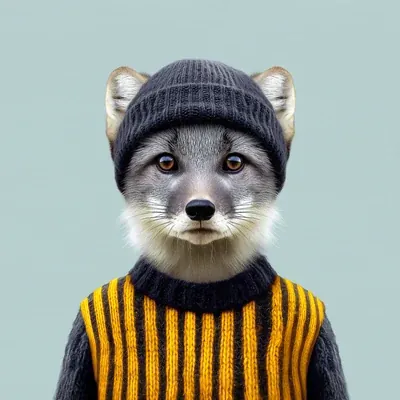
Animal Kinhood Wild animals Least Concern
12 min read 9 chapters Live · Powys
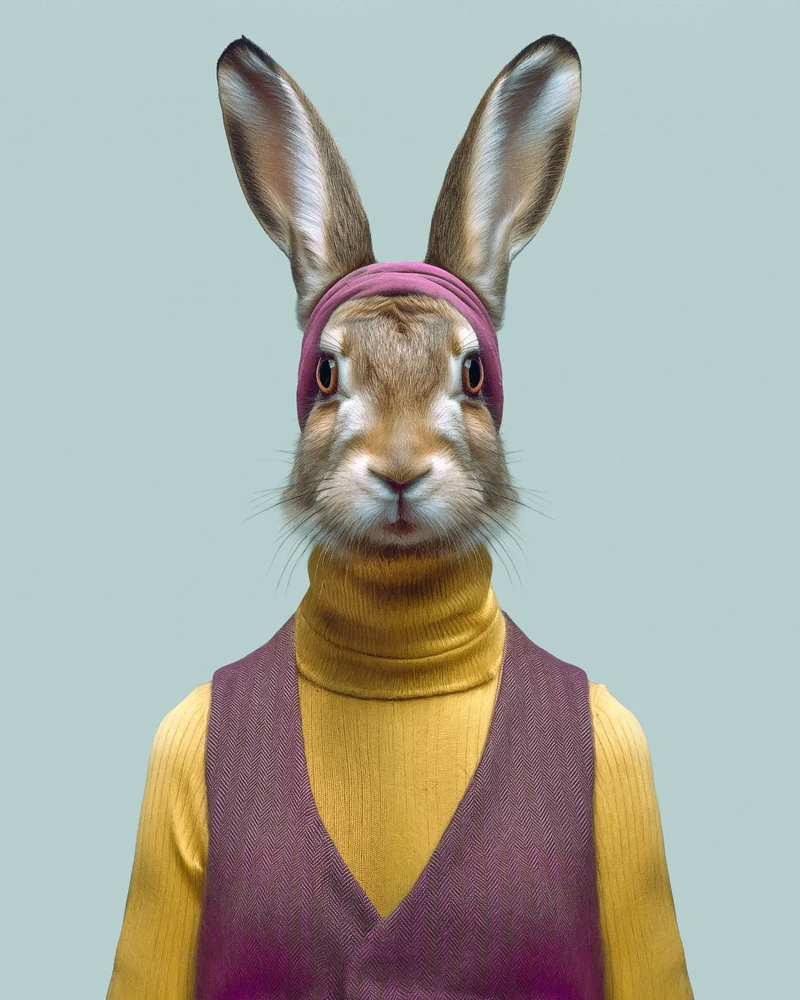
Olwen, European hare — Animal Kinhood portrait by Yago Partal AK · 03 N 52°18′ W 3°30′ Olwen Powys, GB PHOTO ©YP · 2026
Animal Kinhood · Wild animals No. 03 / 23 Episode · Olwen
Lepus europaeus

Olwen.

European hare

A well-laid hedge holds for thirty winters. Hurry doesn't hold for one.
Add it to your Kinhood.Already part of your Kinhood.
Biography · Block 01 of 03 European hare
Chapters · I–II–III

The story.

I
CH · 01 / 09

The first hour, in the dark

Olwen's best hour of the day is over before the rest of the valley switches on the light. She heads out to the stretch while it's still dark, in the dry cold that smells of sap and frosted earth, and works the hedge guided as much by ear as by eye: the billhook sounding, a blackbird complaining, little else. She lays the living hedges of a valley in the Welsh interior by hand, a winter trade almost no one still practises. She works bare-handed much of the time — she needs to feel through her finger where the branch will split — because the cut has a trick to it: you leave a living wooden tongue the thickness of a thumb, bend the trunk almost to the ground, weave it in with the next one along, and through that tongue the sap keeps rising even though the branch is lying down. Cutting without killing. One of her hedges is recognisable from a distance: low, dense, the top plait so regular it looks made with a template. She doesn't use a template. When the frost starts to lift, she stops. At that hour, the wood still doesn't lie.

II
CH · 02 / 09

The price is discussed once

The valley knows her as the hedge one: serious, good at what she does, better not to press her. She answers after a pause, as if the question had to cross the whole field before it reached her, and when she does answer she doesn't waste a word either way. She got that economy from her mother, who ran the childhood farm's sheep flock saying just enough. Limits, Olwen states to your face, once. The price is discussed once and doesn't come down; if a farmer pushes, she goes quiet and stares at the stretch until he changes the subject. That's why the council people avoid her and the old-timers respect her. She sees no heroics in any of this. If someone tries to hand her some, she holds up her hands and closes it down: it's winter work, it pays the bills. She really means it, and not out of false modesty but because she genuinely doesn't think she's doing anything out of the ordinary. And yet she leaves her neighbour's stretch better than she found it and doesn't charge for it, because deep down she thinks, without ever having put it into words, that the land isn't anyone's: you look after it while it's your turn.

III
CH · 03 / 09

The gap in Gareth's hedge

There's one thing she doesn't handle well, and the valley talks about it. She and Gareth, from the big farm at the bottom of the valley, haven't spoken in three winters. It started over a price argument — a long stretch, a bad winter — in which exactly two sentences too many got said, one from each of them, and neither has taken theirs back. Since then Olwen won't set foot on that farm, not even as a shortcut. The trouble is that the hedge along that boundary has been going gappy at the bottom: there are already three metres where the sheep poke their heads through. She sees it every time she passes, because the dirt track she prefers goes right by there. She knows what it would cost to fix now and what it'll cost in two years. She also knows the hedge is not at fault for what got said. She looks away and keeps walking. She doesn't call. She's stubborn to a point that costs her dearly, and she knows it, and still she won't pick up the phone. The living wooden tongue she leaves in every branch so the cut won't kill it — she doesn't know how to leave one with people.

Voiceline · the character’s canonical quote Olwen · European hare
Hover to pause
A well-laid hedge holds for thirty winters. Hurry doesn't hold for one. AK · 03 · Olwen · Powys 2025 A well-laid hedge holds for thirty winters. Hurry doesn't hold for one. Voiceline · Lepus europaeus A well-laid hedge holds for thirty winters. Hurry doesn't hold for one. AK · 03 · Olwen · Powys 2025 A well-laid hedge holds for thirty winters. Hurry doesn't hold for one. AK · 03 · Olwen · Powys 2025 A well-laid hedge holds for thirty winters. Hurry doesn't hold for one. Voiceline · Lepus europaeus A well-laid hedge holds for thirty winters. Hurry doesn't hold for one. AK · 03 · Olwen · Powys 2025
§ 04 · Objects Open editions · everyday
10 pieces · Print on demand

Take Olwen home.

Biography · Block 02 of 03 Roots
Chapters · IV–V–VI

The roots.

IV
CH · 04 / 09

Wool with her eyes closed

Before the hedges there was the wool. Olwen grew up on a sheep farm, and as a child, at the June shearing, her job was gathering the fleeces and folding them with the clean side in. She still knows good wool with her eyes closed today, by the weight and by how it smells of lanolin. That's where the hands-first judgement that runs her whole life comes from: outdoor work doesn't wait for you to feel like it, and a good garment lasts. She knits the mustard high-neck jumper she wears herself, every few winters; the darn on the elbow, almost invisible, is hers too. Her mother is still on the childhood farm. Her sister, on the other hand, went off to Cardiff and stayed there: they talk on Sundays, see each other three times a year, and neither holds it against the other — the city leaves Olwen breathless, the countryside bores her sister, and they both know it. At Christmas her sister sends good tea; Olwen sends wool. It's her way of keeping a boundary open with the one who left.

V
CH · 05 / 09

Lower, more laid-over

Emrys, the valley's senior hedge-layer, taught her the trade. One whole winter he only let her watch; the next he put the billhook in her hand and showed her where the branch would split so the cut wouldn't kill it. No classroom: watch, repeat, and a three-word correction when it was needed — lower, more laid-over, let the wood breathe. At sixteen Olwen worked whole stretches on her own; at seventeen Emrys sent her ahead and came behind checking, and every winter he found less to correct, until one January came when he just walked behind, hands in his pockets, watching. Emrys isn't a debt to her, or a wound: he's the thread of the trade made person. Now that he can't manage the hill anymore, Olwen brings him his shopping on Tuesdays and doesn't mention it; she stays half an hour, leaves him Saturday's paper, and he asks her about the stretches using the fields' old names — the one that drops from above, the one at the bottom — names that appear on no map. She answers with the same names. That's exactly why she learned them.

VI
CH · 06 / 09

Monday, she was back on the stretch

She wasn't always sure she'd stay. At twenty she went to Cardiff to try something else: worked at a nursery on the outskirts, shared a flat with her sister, learned to sleep through traffic noise. Nothing bad happened to her there; something slower did. In the city there was nowhere to see any distance, and that closed up her chest a little more every month. She lasted three years. She came back the winter Emrys could no longer manage the hill on the top stretch, and she didn't announce it or negotiate it with anyone: Monday, she was back on the stretch, stakes ready and an old Land Rover just bought off a scrapyard man in Rhayader. Nobody in the valley asked. You could tell who was laying now because the cuts ran lower. She still drives avoiding the main road if there's a dirt track, even if it takes twice as long, and she walks the whole stretch on foot before touching it — she never judges it from the car: she won't give a price or a cut to a length she hasn't walked first. She always sits with the door in view, and in someone else's house she finds the way out before settling in. She likes to see where she's going.

Biography · Block 03 of 03 Craft
Chapters · VII–VIII–IX

The present.

VII
CH · 07 / 09

The waistcoat too big for her

The plum-tone herringbone waistcoat she wears out to lay hedges every winter was Emrys's. He gave it to her without ceremony, the way things that carry weight get given, the winter he could no longer climb the hill on the top stretch: here, it doesn't keep me warm anymore. It's too big through the shoulders. She hasn't had it altered and isn't going to. She wears it like someone wearing the whole trade — that it's too big says, without her saying it, that the one who taught her was older. Olwen keeps things. She collects old tool handles, almost all ash, some with sixty years of other people's sweat on them; she won't throw out a length of cord that's still useful; she checks three times whether she's shut the gate, and it doesn't matter to her that she knows she has. When something really weighs on her — watching a hedge ripped out by machine, say — she doesn't say so: she goes quieter than usual, which for her is saying something, and that season she lays slower and better. She doesn't process things by talking about them. She weaves them in, or leaves them thicker at the foot of a hedge.

VIII
CH · 08 / 09

Fourteen, and seventeen last year

In summer there's no hedge to lay, so Olwen does something else: she goes out before dawn to count hares for the county census. She walks the boundaries, stops, notes it down in a notebook with an elastic band round it, and doesn't speak to anyone for hours. It's the fourth notebook since she started; the three full ones sit in the kitchen drawer, under a ball of cord, corners swollen with damp. She discovered the first summer that it was the closest thing to rest she knew. What she didn't know then is that the count would come in a little lower every year. She writes down the exact number and doesn't round it — fourteen this year on her stretch of the east slope; seventeen last year; twenty-three five years back — and hands the sheets to the county without comment. The numbers, she says, don't need her to say anything. Laying hedges in winter and counting hares in summer are, to her, two halves of the same thing. What she does about the falling count she doesn't mention either: she lays slower, leaves the foot of the hedges thicker and the grass higher, and charges the same. There was a farm kid who spent one whole afternoon holding her stakes without anyone asking him to; he came back two Saturdays and then school got in the way, or age did. Olwen still keeps a small pair of gloves in the Land Rover, just in case.

IX
CH · 09 / 09

Like visiting someone

Every so often, on some odd winter day, Olwen drops by to see the hedges she laid fifteen years ago. They're at their best now, dense and low, closing the boundary the way they should, and she looks at them like visiting someone. It's the physical proof of the only thing in her life that resembles a faith: that a well-made cut doesn't kill, it thickens; that patience pays off, even if it takes a year to show. A well-laid hedge holds for thirty winters. Haste doesn't hold for one. The next day she's out again before dawn, in the same cold that smells of sap and frosted earth, the billhook sounding and a blackbird complaining somewhere. She eats her porridge standing up, watching through the window the field rising to the east, and heads out to the stretch while it's still dark. She leaves the living wooden tongue. She bends the trunk. She weaves it in with the next one along. At that hour nobody asks her for anything, the summer count feels far away, and for a while there's only a hare, a branch, and the exact gesture of cutting without breaking.

> **Canonical quote:** She lays hedges in winter and counts hares in summer, and knows they're the same thing; she writes down the exact number and doesn't round it.

§ 06 · Connected souls 01 canonical bonds
Animal Kinhood

Connected souls.

§ 07 · Species file Lepus europaeus
Leporidae · Lagomorpha

About the european hare.

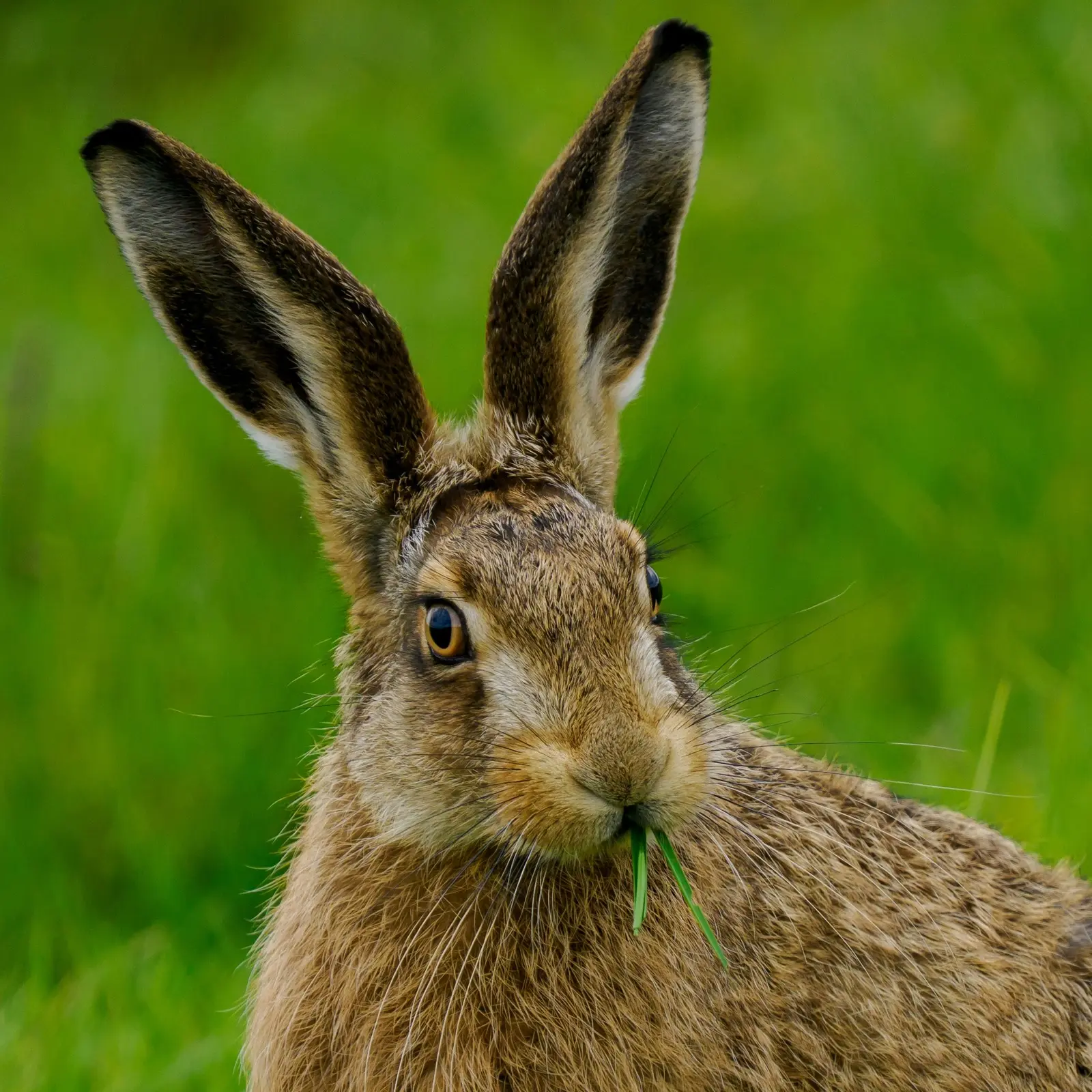
A real European hare (Lepus europaeus) eating grass in a green meadow, ears upright and gaze alert: reference photo of the species.
The real animal · Lepus europaeus Photo: Stuart Bartlett / Unsplash
Habitat
Open fields, grasslands and farmland of continental Europe and Great Britain, almost always bordered by hedges, field boundaries and small copses it uses as daytime cover. It also adapts to moorland, salt marshes, airfields and mountain areas up to 2,800 meters in altitude.
Diet
Strict herbivore: herbs, grasses and broad-leaved plants in spring and summer, switching in winter to bark, woody shoots and cereal crops when tender vegetation is scarce. It practices cecotrophy (re-ingesting its own soft droppings) to extract extra nutrients from cellulose.
Lifespan
Average life expectancy in the wild of just 1 to 4 years (juvenile mortality is very high), but a specimen of 12.5 years has been documented in Poland; in captivity it can exceed 12 years.
Weight
Between 3 and 5 kg, with a slender body and very long hind legs; it is one of the largest leporids in Europe. Females tend to be slightly larger than males, a reverse dimorphism uncommon among mammals.
Adaptation
Eyes set far to the sides and high on the head that cover almost the whole horizon without turning the neck, combined with the hind legs of a long-distance runner: it detects danger sooner and relies on flight in the open, not on a burrow (it doesn't dig; it rests in a simple depression in the grass, the form).
Record
A wild specimen reached 12.5 years in Poland — the longest-lived recorded in the wild for a species whose average life expectancy barely reaches 4 years.

Conservation status

Global (IUCN)
Least Concern
Where it lives
In several countries of Western and Central Europe it is the subject of specific conservation plans despite its low-risk global status, owing to its sharp local contraction in intensive agricultural landscapes.
Population
A widely distributed and abundant species across Europe and Asia as a whole, but with sharp regional declines documented in the 20th century; in Great Britain an estimated decline on the order of 80% since the late 19th century.

Main threats

  1. Agricultural intensification: bigger fields, loss of hedges and field boundaries, agrochemicals
  2. Mechanized harvesting, which destroys litters in the form at grass level
  3. Generalist predators favored by the modern farming landscape
  4. No closed season during the breeding period in some countries

Did you know…?

01
The hare that boxes in March

Each spring, between February and August, hares get into bouts standing up on their hind legs, striking each other with their front paws. For decades it was believed to be male against male, but it has been confirmed that it's almost always a female rejecting or testing a male that's too insistent.

02
Almost total vision without turning the neck

Its eyes, set far to the sides and slightly high on the head, let it detect movement across almost the whole horizon at once. This optical design is the evolutionary reason it relies on flight at top speed rather than on camouflage or a burrow.

03
Young ready to run the same day

Unlike the European rabbit, which bears blind, hairless young inside a burrow, the hare gives birth in a simple depression in the grass (the form) to young already covered in fur, with their eyes open, able to hop within hours.

04
The moon hare from one continent to another

The image of a hare crouched on the surface of the full moon appears independently in British, Celtic, Chinese, Japanese, Hindu and Indigenous American folklore.

05
British population down 80% in a century

Since the late 19th century, the European hare population in Great Britain has fallen by around 80%, mainly due to agricultural intensification.

§ 08 · Conservation three programs · verified
European hare

Help protect this species.

Every purchase helps, but a direct donation does more. Three NGOs with specific programs verified for this species.

No. 01 / 03

HPT.

Hare Preservation Trust

A British charity focused exclusively on the hare: it rescues and rehabilitates injured or orphaned hares and campaigns to ban hunting them during the breeding season.

Donate to HPT
No. 02 / 03

GWCT.

Game and Wildlife Conservation Trust

A British conservation-science organization that maintains the national game census, with decades-long data series on hare abundance on farmland.

Donate to GWCT
No. 03 / 03

FACE.

Federation of Associations for Hunting and Conservation of the EU

A European federation bringing together hunting and conservation associations from 37 countries, promoting the sustainable management of species such as the hare.

Donate to FACE
Animal Kinhood · 23 characters

Twenty-three names. Twenty-three stories. Twenty-three personalities. One same project.

Full catalogue · Drop 01 — Q3 2026 Explore Animal Kinhood